Waterproof flooring is essential in industrial settings. Water damage can disrupt operations and threaten your bottom line across factories, storage facilities, kitchens, hospital environments, and parking garages.
This article will walk you through how waterproof flooring works, its importance, and the benefits to help you choose the right flooring solution for your investment.
Understanding Moisture Risks in Commercial and Industrial Floors
One of the largest antagonists of concrete flooring is water. If water seeps through the flooring and walls, the flooring will weaken and develop holes. Therefore, waterproofing a concrete floor is essential, particularly in areas with heavy traffic.
Many buildings rely on modern waterproofing materials to protect against spills, groundwater, and moisture. Waterproof materials create barriers that protect the flooring system while maintaining the floor’s strength.
Types of Waterproof Flooring Systems
The types of waterproofing systems are the following:
Located in Stouffer
Not all waterproof flooring systems will be the same. This will depend on the specific needs of your space.
Liquid Waterproofing Solutions
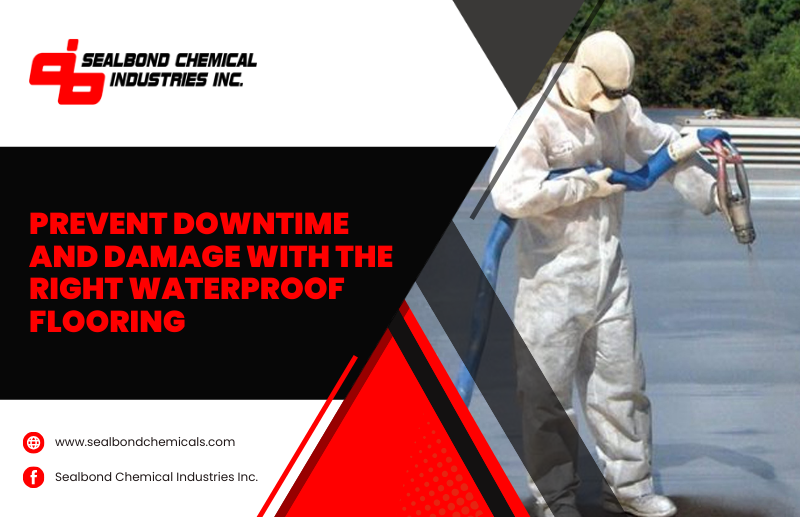
Liquid system polyurethane-based waterproofing has a seamless quality, ensuring it can move along with a surface that can vibrate, a factor that cannot be achieved when using various other materials in its construction. The system is also used in industrial settings that experience temperature fluctuations.
Protection with a Sheet and a Membrane
In areas with heavy water exposure, bituminous waterproofing is a reliable alternative. It is commonly used on basement floors, parking ramps, and service areas where water is constantly present.
Watertight Concrete Protection
Some projects use integral waterproofing, mixed directly into concrete during construction, which reduces water absorption from within, thereby enhancing the slab’s overall durability without affecting the surface.
Industrial Floor Coatings That Perform
They provide chemical, abrasion, and impact resistance, besides just water protection, for manufacturing plants, food processing areas, and logistics hubs. These coatings also improve safety by offering slip resistance and easy-to-clean surfaces.
For cracks and structural damage, structural epoxy for crack repair restores integrity before waterproof systems are applied. Doing so, early in the game, keeps water from entering deeper into the slab.
Advantages of Waterproof Flooring for Your Facility
If it is installed correctly, waterproof flooring has numerous advantages:
Lowered maintenance and repair costs
Extended floor life
Enhanced safety and cleanliness
Protection against mold and structural damage
Increased adherence to industrial standards
These advantages mean a reduction in disruptions and optimal performance.
FAQs
What is the best waterproof flooring option for industrial use?
And the best solution for the above-mentioned requirements depends on the level of exposure, while liquid-applied systems, heavy-duty coatings, and so on are usually preferred for industrial settings.
Is waterproof flooring suitable for existing concrete?
Yes. The existing floor can be restored and strengthened with waterproofing systems after proper surface preparation.
How long does waterproof flooring last?
Properly installed and maintained, high-quality waterproof flooring systems should last 10 to 20 years or longer.
Protect Your Floors with Sealbond
Waterproof flooring is an investment in durability, safety, and efficiency. Whether managing a factory, a warehouse, or a commercial property, the right flooring can make a significant difference. Sealbond offers expert waterproofing solutions for commercial and industrial environments. From proven materials to specialized expertise and trusted installation methods, Sealbond helps you build floors that last.