
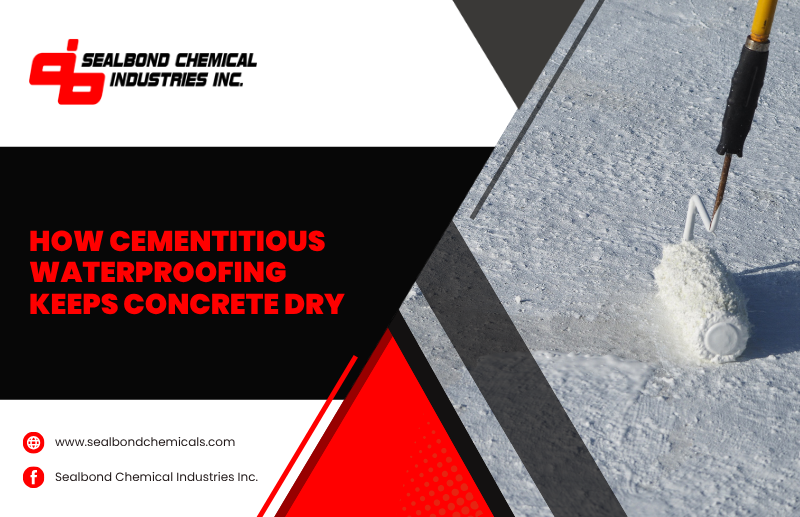
How Cementitious Waterproofing Protects Concrete From Water Damage
Water and concrete have a complicated relationship. Concrete may appear solid and permanent, but in fact it is riddled with microscopic pores and capillaries that soak up moisture over time. Water gets in and then breaks things down from the inside out.
Serious damage to surfaces designed to last decades, such as cracking and rebar corrosion, can begin to occur within just a few years.
Cementitious waterproofing is one of the most commonly used methods to prevent this from happening. For decades it has been a trusted material for building basements, water tanks, tunnels, and foundations.
What Cementitious Waterproofing Actually Is
Cementitious waterproofing is a coating made of cement, sand, and chemical additives that work together to stop water from getting into a concrete surface. It is mixed into a slurry or paste and applied directly to the surface, where it bonds with the concrete and fills the pores.
This system is not applied to a surface such as sheet membranes or liquid coatings but becomes part of the structure itself. The cementitious components chemically react with the concrete and grow crystals in the pores and capillaries. Those crystals physically block water from passing through.
Being cement-based, it will naturally bond to concrete and masonry without the need for primers or complicated surface preparation. That makes it one of the easier waterproofing methods to apply.
How It Works at the Surface Level
Concrete may appear smooth and solid, but under a microscope it is full of tiny gaps and channels. Water will get into those gaps and find a way, especially if there is pressure behind it from ground water or heavy rain.
Here is where a cement-based waterproofing system comes in, which works by penetrating the surface and filling those channels with a dense, crystalline structure. After the curing process, the structure becomes strong enough to contain water with pressure from the other side.
Negative-side waterproofing is when it is applied to the inside face of a wall where water is pushing through from the outside. It is one of the few waterproofing systems that performs well in that situation, which is why it is a popular choice for basements and water-retaining structures.
Rigid vs. Flexible: Understanding the Two Types
Not all cementitious waterproofing systems are the same. The two major types have different uses and work better in different circumstances.
- Rigid Systems: These are the traditional form. They stick well to the surface and don’t wash off easily, but don’t take to movement well. The structure moves or cracks slightly, and a rigid coating breaks. This makes them best suited for steady structures that are not expected to flex or settle.
- Flexible Cementitious Waterproofing: This type has polymer additives that make the cured coating elastic. It can expand and contract and move with the structure without cracking, so it is a good choice for surfaces that get hot and cold, vibrate, or move a little structurally. It works well on balconies, split levels, and where rigid systems would be too brittle to withstand.
The key is to know what the surface will be exposed to when choosing between the two. A stable underground water tank is a different environment than a rooftop terrace that expands and contracts with every season.
Where Cementitious Waterproofing Gets Used
The system’s versatility is part of the reason it has lasted so long. It is suitable for several applications in residential and commercial buildings.
Basements and Below-Grade Walls
There is always groundwater pressure in underground spaces. A cementitious waterproofing membrane applied to basement walls and floors creates a barrier that resists that pressure from either side.
Water Tanks & Reservoirs
These structures require a waterproofing that is safe for contact with potable water. Cementitious systems are non-toxic after curing and hence an approved material of choice for water storage structures across the world.
Swimming Pool
Pool shells are always under water, so they need a coating that can handle constant exposure to water. The cementitious waterproofing sticks to the concrete shell, keeping water inside but also preventing ground water from pushing in from the outside.
Tunnels and Subterranean Space
The structures are subject to hydrostatic pressure from the surrounding soil and groundwater. A properly applied cementitious system controls that pressure while bonding to the concrete structure without the risk of delamination.
Wet Rooms and Bathrooms
The residential applications are equally common. Around bathtubs, wet room floors, and on shower walls, a waterproofing layer is applied so that moisture does not penetrate the substrate beneath the tiles.
Foundations
The foundation is the most crucial structural element of a building. It’s a lot easier (and less expensive in the long run) to prevent it from water infiltration from the start than to try and repair the damage later.
The Application Process
Cementitious waterproofing is also relatively easy to apply, which is why it remains the choice of contractors and builders. No open flame, no complicated machinery, no highly specialized skills.
- Surface Preparation: The concrete surface needs to be clean, sound, and free from dust, oil, and loose material. Any existing cracks should be filled before waterproofing begins. The surface should be damp but not wet during application.
- Mixing: The dry powder is mixed with water or a polymer liquid depending on the product. It should reach a smooth, lump-free consistency similar to thick paint or plaster.
- First Coat: The mixture gets brushed or troweled onto the surface. Working it into the pores and against all corners and edges is important at this stage. Thin, even coverage is the goal.
- Curing the First Coat: The first coat needs time to set before the second goes on. Rushing this step leads to weak bonding between layers.
- Second Coat: Applied in the opposite direction to the first to ensure full coverage. Some systems require a third coat in high-exposure areas or where water pressure is significant.
- Curing the Final Coat: The finished surface needs to stay moist for several days to cure properly. Drying out too quickly weakens the crystalline structure that does the waterproofing work.
Why It’s a Smart Long-Term Choice
Cementitious waterproofing has been used in construction for a long time and with good reason. It’s more than just a barrier to water; it offers lots of practical advantages that make it better than other systems.
It Blends with the Framework
It chemically bonds with the concrete instead of sitting on top of it, so it can’t peel or delaminate like sheet membranes sometimes can. The coating and the concrete are virtually one.
It Works Under Both Sides Pressure
Most waterproofing systems only resist pressure from one direction. It is fought from both sides by cementitious systems and is one of the few options that work on interior walls where water has already forced its way through from outside.
Drinking Water Safe for Contact
Most waterproofing products are not approved for use in potable water systems. Cementitious products used for water tanks, reservoirs, and structures for drinking water are approved to the appropriate safety standards.
It’s Inexpensive
Materials costs are usually less than liquid membrane or sheet systems, and application does not require costly equipment or specialized labor. That keeps the overall project costs manageable without sacrificing performance.
It Can Repair Its Own Hairline Cracks
Some cementitious products continue to crystallize after curing. Those crystals will expand and fill that void all by themselves when a hairline crack develops and moisture gets in—providing strength most other coatings can’t match.
Common Mistakes That Affect Performance
Even a reliable system can fail if applied incorrectly. A few mistakes come up more often than others.
- Applying to a Dry Surface: The surface needs to be damp for the coating to bond and cure properly. Applying to dry concrete draws moisture out of the coating before it has time to form its structure.
- Mixing Inconsistently: Lumps in the mix create weak spots in the finished coating. Always mix thoroughly until the product is completely smooth.
- Skipping the Second Coat: A single coat rarely provides full coverage. Two coats applied in opposite directions give the system the depth it needs to perform.
- Not Protecting the Cured Coating: Fresh cementitious coatings need to stay moist during curing. Exposing them to direct sun or dry wind too early weakens the final result.
FAQs
When to use cementitious waterproofing?
The best time is during the construction phase before a structure is backfilled or finished. It can also be used on existing surfaces as long as the concrete is sound and adequately prepared. The surface should be damp but not wet at the start of application.
How many coats of cementitious waterproofing?
Most applications call for two coats. The first one works on the surface. The second one fills in any gaps left behind. Depending on the product, a third coat may be required in areas of high water exposure or where there is a significant hydrostatic pressure.
How long does cementitious waterproofing last?
If used correctly, it will last for decades. It doesn’t break down like surface coatings because it bonds to the concrete rather than sitting on top of it. The longevity depends on the conditions, quality of application, and whether or not basic maintenance is done over time.
Protect Your Structure With the Right Waterproofing System
Water damage is one of the most expensive problems a concrete structure can develop. The longer it goes unaddressed, the more it costs to fix. A properly applied cementitious waterproofing system is one of the most reliable ways to stop it before it starts.
At Sealbond, we carry waterproofing solutions built for real construction demands. Browse our waterproofing products and find the right fit for your structure.