Role of Unidirectional Fibers in Structural Integrity
Unidirectional fibers enhance structural resilience. With the construction industry adopting lightweight yet strong materials, fiber composites have emerged as a trusted solution for reinforcing structures. Knowing how it works enables you to make informed choices on reinforced concrete constructions.
Know how these modern-day composites improve concrete structures and enhance the performance of the structural system.
What Is a Unidirectional Fiber Composite?
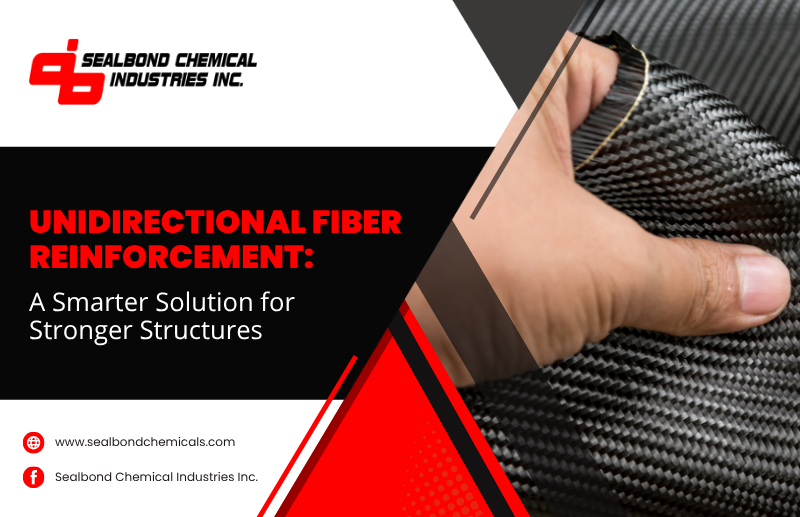
A unidirectional fiber composite is a high-strength reinforcing material composed of fibers oriented in a single direction. This enables them to withstand high tensile stresses without adding much weight to the structural system. They are used in bridges, buildings, parking decks, and industrial structures because they provide high strength while adding minimal weight.
Ways in Which Unidirectional Fiber Composites Enhance Structure
High Tension Strength Where It Is Needed Most
Unlike conventional steel-based, unidirectional fiber composites, which are designed to have high tensile strength along the fibers’ axis. This ensures that the structure can withstand stresses such as bending moments and loads without failing.
Lightweight But Highly Resistant
Another key strength of such composites is a high strength-to-weight ratio. Since it does not add much weight to the structure, the installation is easier and less intrusive than traditional techniques. The composite material’s high corrosion resistance is another factor in its favor.
Long-Term Structural Performance
A well-installed fiber composite system will help prevent structural degradation by improving load distribution. Repair weak spots and improve the longevity of aging infrastructure. In any project involving crack repair for concrete, engineers will assess the need for fiber reinforcement to improve future structural performance.
Typical uses for Unidirectional Fiber Composites
These cutting-edge materials find many practical uses due to their adaptability.
Some typical uses are:
- Structural beam restoration
- Deck reinforcement on bridges
- Structural column improvement
- Seismic retrofitting
- Parking structure repair
- Industrial building upgrade
The adaptability of these materials means that engineers can support only specific sections of structures.
Why Proper Installation Is Important?
Even though composite materials are durable and good, proper installation remains the most important factor. Special high-quality epoxy resin is often used for bonding fiber composites to concrete surfaces. Properly installed epoxy makes the bond very strong and allows loads to be transmitted easily from the concrete to the advanced system.
FAQs
What gives unidirectional fiber composites their strength compared to conventional materials?
The fibers are oriented in one direction, making them better able to withstand tensile loads. Provides great structural efficiency without adding any extra weight.
In what applications are unidirectional fiber composites employed?
Unidirectional fiber composites are used in bridge strengthening, commercial structures, parking garages, industrial structures, and in seismically sensitive structures that need reinforcement.
What is the lifespan of fiber composite reinforcement systems?
Properly designed and installed fiber composite systems can last for decades. Regular inspection and maintenance will contribute to their maximum service life.
Strengthen Your Structure with Sealbond
The first step toward building a strong structure is having effective reinforcement solutions. For both renovation and new construction projects, fiber composites are ideal for strength and durability. Sealbond is a reputable provider of reinforcement solutions and has the appropriate materials and technology.