
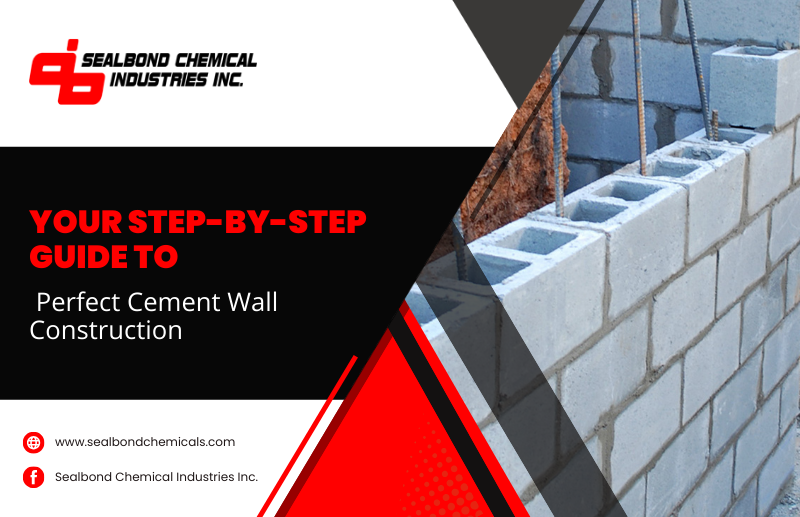
The basic ingredients for cement walls are cement, sand, gravel, and water. Put together, they form concrete, a robust and very stable material that is hard and resembles stone.
This article will help you with all the info you need, from the material to the methods, and on to maintenance and waterproofing.
Why Cement Walls Are a Top Choice?
Cement walls offer several long-term benefits than other types of walls as it provides:
Strength and Durability
With proper reinforcement, cement walls can withstand bad weather, heavy loads, and even earthquakes.
Fire Resistance
Unlike wood or drywall, cement is not flammable; thus, besides other qualities, it provides safety to your house.
Soundproofing and Comfort
Concrete is a very dense material, which helps keep sound out and the noise level inside at a minimum.
Energy Efficiency
Walls made of cement serve as effective natural heat insulators, thus saving energy for both cooling and heating.
Low Maintenance
Cement walls have very low maintenance requirements and a lifespan of over 50 years.
These characteristics make cement walls the wise choice for modern homeowners seeking both strength and eco-friendliness.
Key Materials in Cement Wall Construction
To build strong walls, every material you apply in the process must be of high quality. The most important ones are:
- Cement: The primary binding source, which, after hardening, provides one solid mass.
- Sand: It is applicable to fill the spaces between particles, thereby ensuring the neatness of the texture.
- Gravel or Crushed Stone: It provides volume and firmness to the mixture, helping it remain free of cracks.
- Water: It is the element that, by combining with cement, makes the mixture hard.
- Concrete Binder: It strengthens the bond between fresh and hardens concrete surfaces, thereby increasing the efficiency of repairs and reinforcements.
The result will be weak walls, early cracks, and poor finishing if you use poor materials or if you put wrong proportions. Always consult the suppliers’ quality certificates before buying.
The Importance of Proper Mixing and Pouring
Incorrect mixing is the most common fault in the construction of cement walls. The proper ratio of each ingredient ensures a balanced mixture; if there is too much water, the wall will be too weak, but if there is too little, the setting will not be done properly before drying.
While you pour concrete, you may open the voids, due to air within, with a vibrator or tapping tool. This technique enables the concrete to spread uniformly in the mold, ensuring a stable, tight construction.
After concrete pouring, in addition to curing, level or check the work for the absence of any pits or holes.
The Role of Curing in Wall Strength
By curing, the concrete is kept in a state of humidity, allowing it to become stronger gradually. Usually, the duration of such a process varies from 7 to 14 days, depending on the weather.
When the concrete dries too quickly, it becomes weak and may develop cracks. The uninterrupted curing process gives more time for the cement grains to unite, making the concrete more durable and retaining its natural resistance to weathering.
Water spraying, wet covering, and some curing compounds are effective ways to retain the moisture.
Common Cement Wall Issues
Cement walls may have inherently faulty features. Knowing these issues will assist you in preventing and resolving them at an early stage.
- Cracking: The root cause is primarily structural stress or inadequate curing.
- Water Seepage: Water infiltration through a wall that has not been correctly sealed or waterproofed is the leading cause of this phenomenon.
- Efflorescence: A powdery-white substance that covers the surface and is brought about by the migration of water.
- Poor Finishing: The surfaces are rough or uneven due to poor workmanship.
- Weak Bonding: It results from improper surface preparation before applying the new concrete layer.
By dealing with them at an early stage, you are saving yourself from experiencing major structural problems later.
The Significance of Waterproofing in Cement Walls
Water has been behind some of the most frequent situations of wall destruction. Concrete weakens while mold can develop on it; hence, the structural integrity is lowers. Thus, the reason for waterproofing your cement walls is that if not, you are exposing your basement, bathroom walls, and the outer walls to more damage brought by the rain.
Ensuring that the waterproofing materials you will use are of top-notch quality will help in keeping your wall safe from water vapor penetration; once it is done, it is good to follow up with painting or finishing.
Different Types of Waterproofing Methods
There are different ways to waterproof cement walls, and the choice depends on the conditions and end use.
Bitumen Waterproofing
Bitumen waterproofing is a method in which a couple of bituminous products serve either as coatings or membranes. Being perfect for underground or foundation walls, as one can count on a thick, long-lasting layer that almost completely stops water from getting through, is what makes it an excellent solution.
Polyurethane Waterproofing
Polyurethane waterproofing is great for both water-prone walls and roofs, which results in a single, flexible layer that can adjust to slight changes in surface area and is also very resistant to sunlight and harsh weather.
Integral Waterproofing
Integral waterproofing is consists of incorporating the waterproofing agent in the concrete mix. It basically makes the outer layer indestructible from the inside, and thus, water cannot penetrate.
Not only will they stop indefinite leaks, but they will also prolong the lifespan and appearance of your walls.
Keeping the Walls Structurally Strong
In order to make the cement walls resistant to the forces that pull them apart, it is a common practice to insert steel reinforcement bars or rebars, inside them. Unreinforced concrete is a material that is inherently strong under compression but weak under tension.
Carbon fiber retrofitting is the best way to enhance the wall stability of old houses while at the same time not increasing the volume or weight. It has been widely applicable in structural upgrade works, bridges, and industrial projects, thus, it is a very reliable for the long-term benefits.
Cracking Prevention and Repair
Among the most critical problems of building cement walls, cracking is one of them. Hairline cracks may not seem very frightening; however, they may grow larger if you neglect it over time.
For non-structural cracks, patching or filling compounds are sufficient. On the other hand, for larger or structural cracks, it is highly effective to use structural epoxy for crack repair. It not only restores lost strength but also seals the crack, making it waterproof and airtight.
Long-Term Maintenance Tips
The process of taking good care of your cement walls is not as difficult as you might think. Here are some of the methods that will help them live longer:
- Regular Inspections: Look over the walls for cracks, water stains, or mold growth every couple of months.
- Reapply sealants: Put on a protective layer every couple of years to make the wall waterproof.
- Make sure there is proper drainage: Drain the water away and not towards the foundation of your home.
- Additional treatments: The cost goes up in you add waterproofing, insulation, or decorative finishing, but it pays in durability.
It is always advisable to obtain a comprehensive quotation and verify the coverage of all the stages from formwork and pouring to curing and finishing.
Eco-Friendly Cement Wall Options
At present, modern homeowners anticipate the adoption of green solutions in the house-building industry. Here are some sustainability practices you can take into consideration:
- Recycled Aggregates: It is good to use crushed old concrete or recyclable waste as binding aggregates because it is also environmentally friendly.
- Low-carbon cement: The emission of CO₂ during the whole process is less.
- Energy-Efficient Design: The implementation of cement walls along with proper ventilation and insulation results in energy conservation.
You know sustainability is not a fad but rather an investment worth making for the coming generations.
FAQs
How much time does a cement wall need to be completely dry?
Usually, cement walls achieve 70 percent of their strength after 7 days and full strength after 28 days.
Can there be a perfect method of waterproofing for cement walls?
It is subject to your geographical location and exposure, if any. For above-ground areas, polyurethane water repellent is good, while bitumen waterproofing is best for headwalls and underground walls.
Is it permitted to insulate cement walls to make them energy efficient?
Certainly, you may install insulation boards or layers on either the internal or external surfaces. This will keep your home cool in summer and warm in winter, while also saving on energy costs.
Build Stronger Walls with Sealbond
Your home’s strength starts with the walls. Sealbond provides the best solutions that not only prevent leaks in cement walls but also protect them from cracks and moisture damage. With the help of waterproof-sealant coatings and repair systems, both credible technologies from Sealbond, we can be your house’s maintenance partner for many years. Contact us today, and let’s be partners for sturdy, waterproof, and long-lasting walls.